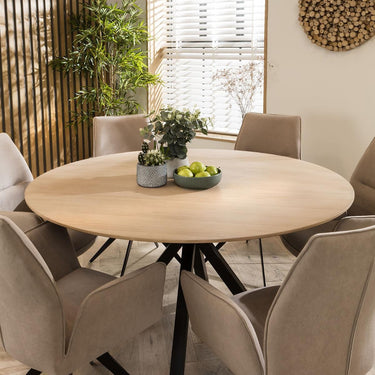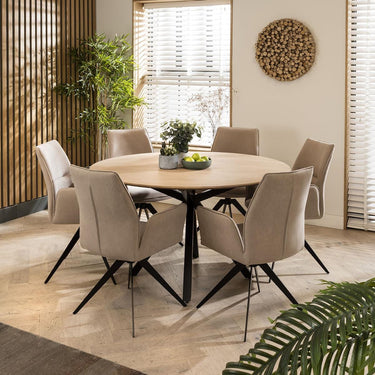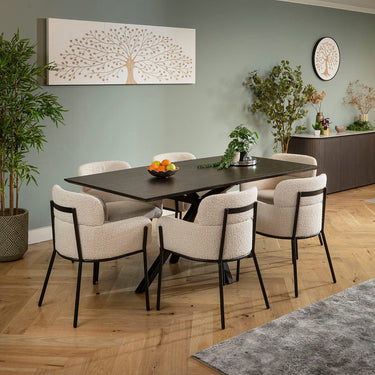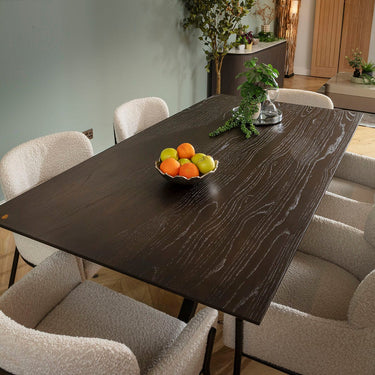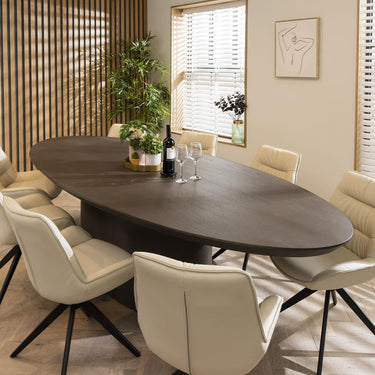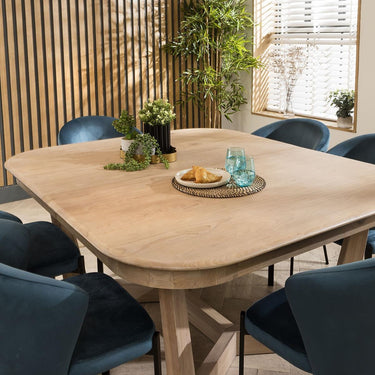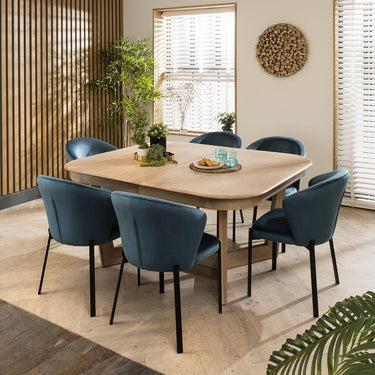


There is nothing quite as satisfying and beautiful as a piece of precisely engineered wooden furniture.
But which type to choose? It's a common question.
Veneer
There are many positive reasons for using veneer - not least because nowadays the very highest quality logs are sold to veneer merchants.

Veneer merchants have very exacting requirements and look for logs that are uniform in colour, have uniform growth rate, centred pitch, no shake or mineral streaks or stains and nominal external defects.
A good deal of high end furniture is now made from veneer - partly for the reason that the quality of the wood used for the veneer is of the highest grade, but also for reasons of design, minimal movement and availability of exotic and unusual timbers. For the customer, veneer furniture is more robust and more easily maintained.
Solid Wood
Solid wood, even kiln dried, is subject to expansion and contraction as the wood continually changes with the amount of relative humidity in the surrounding atmosphere. Wood moves as its moisture content varies, swelling as it absorbs moisture and shrinking as it releases moisture. The grain structure causes wood to move differently in three directions. Wood will move much more across the grain, tangentially along the growth rings; but there will also be some movement in the radial direction, and a very tiny amount longitudinally.
This movement will also happen in veneer, but since veneer is much thinner than solid, the movement is minimal; and the expansion and contraction is limited by the relative smaller mass of the leaves of veneer compared to solid.

Working in solid wood is lovely, but it can sometimes be restrictive in terms of design. Veneer is more forgiving with regards to movement and therefore increases the range of design possibilities.
In Summary
Which is better?
Choose solid wood if you want a long-term investment piece, natural character and the ability to refinish the furniture over many years.
Choose veneer if you want the authentic appearance of real wood at a lower price, particularly for larger furniture pieces where stability and value are important.
Importantly, veneer isn't the same as laminate or fake wood. Quality veneer is genuine timber, carefully cut into thin sheets and applied to a strong engineered base.
Veneer wins environmentally. Choosing veneer rather than timber makes the world’s trees go further, because it’s possible to yield more veneer than timber planks from a log – much more.
Quatropi is proud to offer both solid wood and wood veneered furniture for all your home requirements. View our WOOD DINING TABLES WOOD COFFEE TABLES WOOD SIDEBOARDS
Chat with a member of our sales team if you have any questions.